The Hive Construct is Maskill’s début novel and I’m delighted to be a part of the blog tour! Today I’m sharing a guest post from the author, about what influenced him to write the book. Find more about The Hive Construct here!
The Hive Construct’s biggest influence was the year I’d spend prior to writing it studying politics at the University of Leicester. My degree required that I study political systems and social structures and the like, and so it was what was on my mind when I sat down to work out what the story would be. The story is a political story, it’s a story of political strife. The best thing you can do as a creative person is to not just draw on other creative works, but to combine outside interests of yours with your creative inclinations to create something less derivative than it otherwise might be.
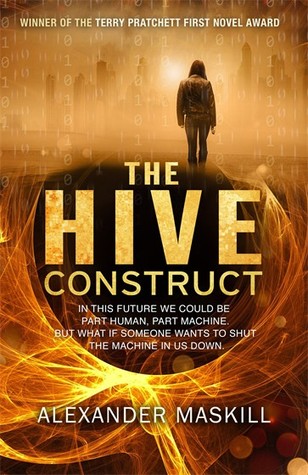 Getting more into other creative influences, the book was, in many ways, inspired by The Wire. I was really interested in exploring a society’s systems from multiple points of view, examining how the institutions of that society inexorably draw them into conflict – and The Wire is maybe the best ever telling of that particular story. The original title for The Hive Construct, which was just “The Hive”, is literally two letters away from “The Wire”, that’s how influential it was on me. At the same time, I wasn’t bound by journalistic experiences in the same way David Simon was, which allowed me to extend the themes into the details of the world-building. It made sense to me to parallel the ways people integrate themselves into the systems around them with people literally integrating themselves into information systems, and extending that metaphor wherever I could. Obviously this drew to mind other stories about transhumanism – Ghost In The Shell, Deus Ex and The Matrix being the most obvious ones in my mind.
The Mass Effect series of video games also ended up playing a significant role in a lot of my approach to world-building. My big dirty secret is that I don’t actually read that much science fiction, so the Mass Effect universe is probably the most developed science fiction universe I’ve ever been invested in. This is obvious everywhere from the way I describe the novel’s portable computers to some of the thematic concerns later on in the story.
Something else I realised a little while later was precisely how subconsciously influenced by the show Legend of Korra my Serious, Adult Political Novel ended up being. Talented young woman goes to a huge city in the middle of a major social upheaval, has often-contentious relationship with both sides and things escalate from there. I mean, I spent less time on fictional sports and love triangles, so maybe I missed a trick there.
Alexander Maskill grew up in East Sussex. He has just completed a Politics degree at the University of Leicester and hopes to follow this with an MSc in Computer Science. The Hive Construct is his first novel and won the 2013 Terry Pratchett Prize.
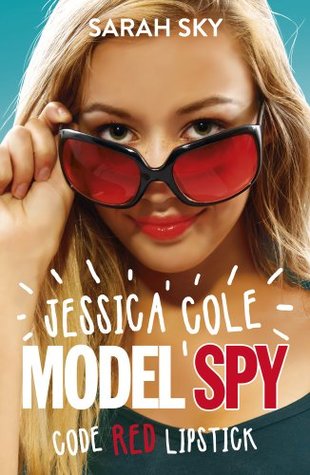 Goodreads Synopsis: Models, spies and lipstick gadgets… When Jessica’s father, a former spy, vanishes mysteriously, Jessica takes matters into her own hands. She’s not just a daddy’s girl who’s good at striking a pose; she’s a trained spook who knows how to take on MI6 and beat them at their own game.

 My Top Five Eating Disorder/Mental Health Memoirs
 I wasn’t going to include this one initially, partly because it’s already so widely recognised it feels almost superfluous to mention it again, and partly because it’s so widely acknowledged to be the sort of material eating disorder sufferers use as ‘thinspiration’ (Hornbacher discloses her weight and the number of calories she is consuming at pretty much every opportunity, and her descriptions of her illness are horrifying in their honesty and graphic detail). But then I was flicking through it for the hundredth time, and realised for the hundredth time that it is the sort of book it is all but impossible to flick through, because the writing is so searingly brilliant one is immediately sucked in. The way Hornbacher describes anorexia and bulimia is gruesome, dark and messy, and makes for uncomfortable reading at points, but eating disorders are gruesome, dark and messy, and to write about them in a way that evokes anything other than discomfort would be somehow wrong.
 This is the book I want to shove in the face of anyone who suggests that bulimia is ‘less serious’ than anorexia. Gleissner’s account of the way in which her compulsion to binge and purge drove her to steal from her loved ones, leave a string of jobs in quick succession and ultimately admit herself to a rehabilitation facility is a terrifying glimpse into the nightmare of bulimia. This book also does a fantastic job of exploring the dichotomy between the face eating disorder sufferers tend to show to the outside world – competent, successful, ‘sorted’ – and the reality of their inner selves – tortured, tormented, broken.
 I think it’s possible that part of the reason why I liked this book so much was how pleasantly surprised I was to like it at all, it being a ‘celebrity ED memoir’ – a genre which Nikki Grahame taught me to treat with extreme caution. But, even discarding that bias, I think this is a really well-written, touching and interesting account, not just of eating disorders but of their interplay with both fame and sexuality.
 This book is both excruciating and achingly admirable in its tackling of what remains something of a taboo: how an active eating disorder sufferer can manage – or fail to manage – the task of parenting. Rivera is touchingly honest in her account of how her anorexia and bulimia took her away, emotionally and physically, from her young daughters, and at times it is painful to read of the neglect these children suffered as a result of their mother’s sickness. But Rivera writes with skill, precision and self-effacing humour, which prevents the narrative from feeling heavy-going.
 Though this book does explore a little of the author’s struggle with anorexia, it is primarily a memoir of borderline personality disorder, and of the intensive psychotherapy Reiland undertook in order to bring her disorder under control. The level of self-disclosure in the book is admirable, offering a comprehensive insight into one of today’s most widely misunderstood mental illnesses, and the writing is masterful. I also really enjoyed the way in which this book explored therapy and the therapeutic relationship in such detail, as I think this is an aspect of mental health which lay people can find difficult to grasp, unable to quite understand the dually intimate and professional nature of the relationship between client and therapist.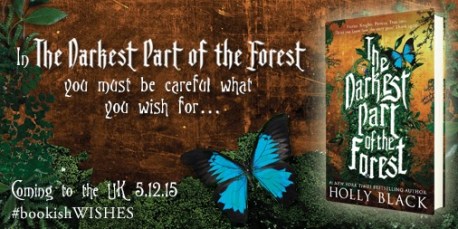

 Holly Black is the bestselling author of YA and children’s books including being co-creator of The Spiderwick Chronicles, a NEW YORK TIMES No.1 bestselling phenomenon and hugely successful film. She has been a finalist for the MYTHOPOEIC AWARD, the EISNER AWARD and a recipient of the ANDRE NORTON AWARD and a NEWBERY HONOR. She currently lives in New England in a house with a secret door.

 One day to go! It’s the 9th of October – Which means that tomorrow The Maze Runner is officially released in the UK! Today’s blog post is an exciting blog tour one, celebrating the movie’s release.
 I grew up in a country without a king or queen, so the life of Elizabeth Stuart, daughter of a king, who was to become a queen herself, seemed like something out of a fairy tale.


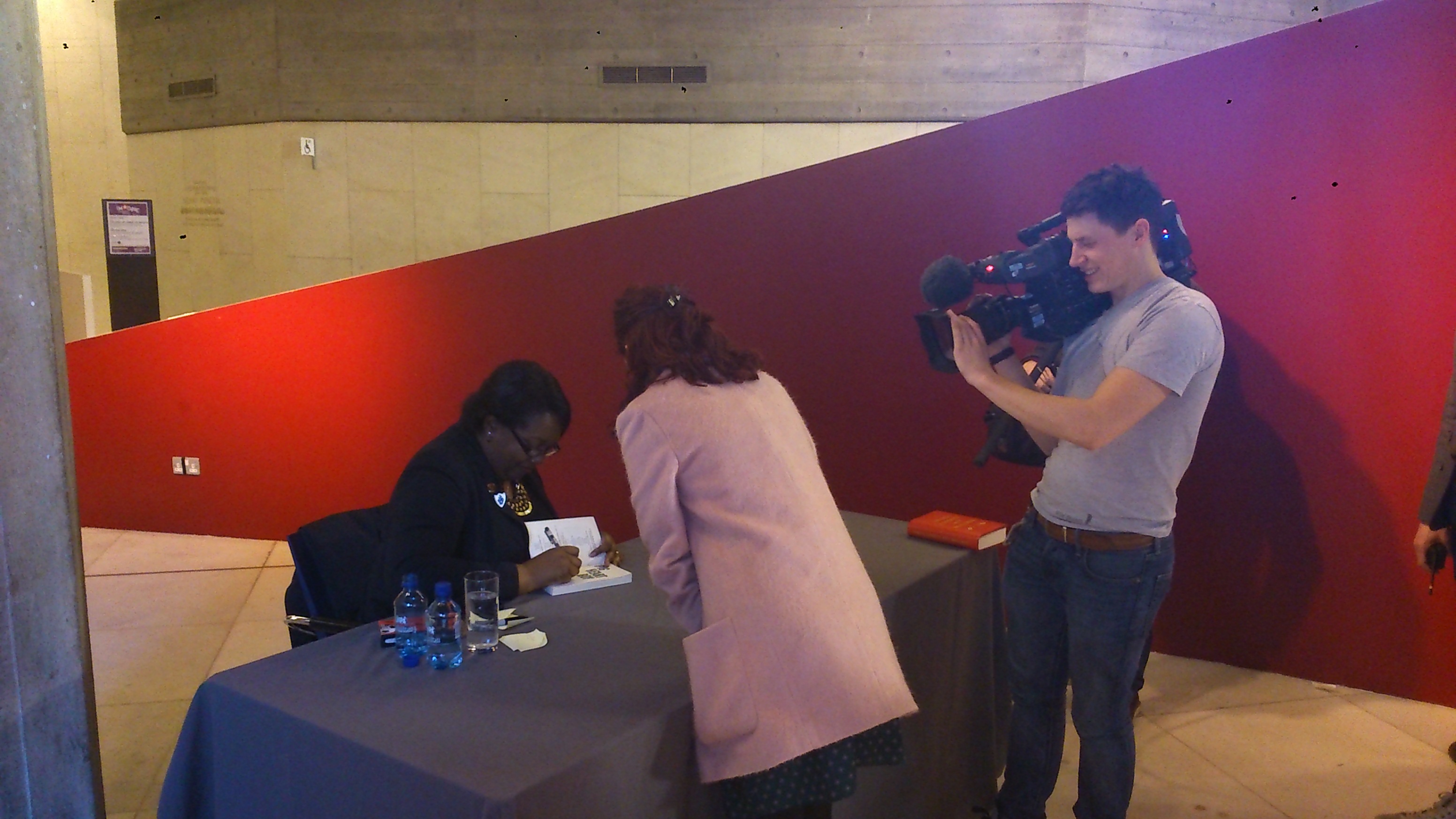

 Hello, people! The lovely Sophie from A DAY DREAMER’S WORLD is hosting a really special blogging week, to go with a special themed week that’s happening too: Anti-Bullying Week. She’s been posting some brilliant author guests posts, that are both emotional and supportive. Sophie’s so amazing for hosting this blog week, and supporting bullying victims in general.
 #1: Finding Cherokee Brown by Siobhan Curham
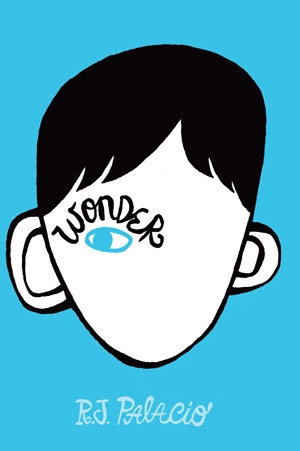 #3: Wonder by R J Palacio
 #5: Diary of a Wimpy Kid by Jeff Kinney:
 #8: Paper Aeroplanes by Dawn O’Porter:
 the bibliomaniac book blog