As I’m writing this, I have one week until I go back to sixth form, and when this post publishes, it’ll be one day (aaaahhh!) I’m sort of dreading starting year 13, especially after a really great summer. I’ve done so many cool things but now I’m preparing to return to a non-existent social life and even more academic pressure than I’ve ever had before.
Sooo, how am I gonna cope with that? BOOKS!
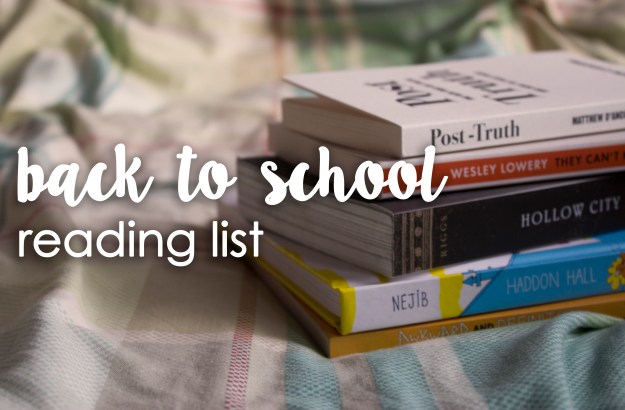
This blog post is a list of all of the books I hope to read in the (little) free time I have during my first school term.
Disclaimer: I will probably not read all of these books during my first term back. I’m going to be so busy. But the IDEA of reading them is comforting to me, so this post is still valid, right? Without further ado, here’s the five books I’d like to read:
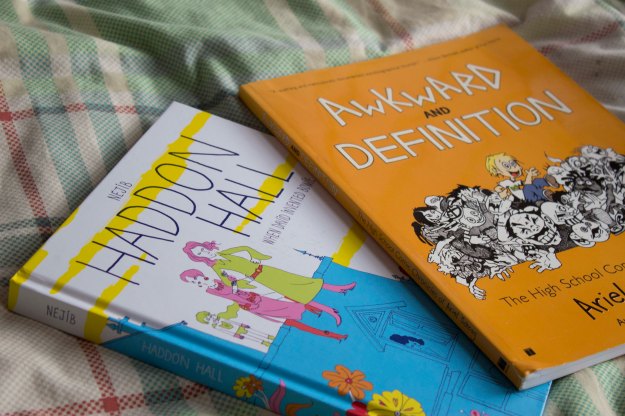
Haddon Hall: Where David Invented Bowie by Néjib
My dad picked up a copy of this graphic novel, but I had to steal it from him! It’s a portrait of David Bowie’s life, right at the start of his career, documenting his time in Haddon Hall. I’m local to Beckenham and this place Bowie used to live, so I thought it would be a really interesting read. The cover is so vibrant!
Awkward and Definition: The High School Chronicles by Ariel Schrag
I purchased Likewise, another graphic novel by Schrag, before realising I didn’t own the precious books in the series. This graphic novel collects the first two memoirs she wrote, whilst still in high school. I’ve read so many fantastic reviews of this relatable and quirky memoir series, so I’m really eager to start it. And what better time to read it than my last year at school?
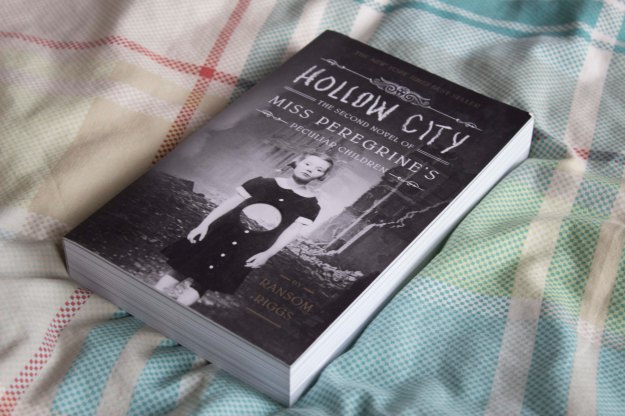
Hollow City by Ransom Riggs
I adored Miss Peregrine’s Home for Peculiar Children, the original book and the film. It’s probably one of my all-time favourite YA books. Despite having first read Miss Peregrine’s a while ago, I’ve never gotten around to its sequel. I’m putting this at the top of my TBR pile as I think it’ll be the perfect book for escapism on study breaks.
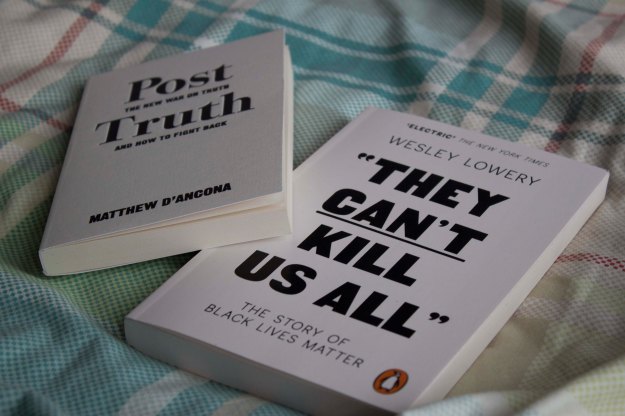
Post Truth: The New War on Truth and How to Fight Back by Matthew D’ancona
One of my new resolutions is to read more non-fiction; more specifically about politics and society. It’s hard to stay away from the news in the current political climate, but so-called “fake news” has become so common that it’s difficult to know when and how to respond. I’m hoping to learn a lot from this!
They Can’t Kill Us All by Wesley Lowery
I’ve read so much about Black Lives Matter, but only in small snippets across social media. I’ve wanted to educate myself more about the situation of police brutality in America, so this book has been on my radar for the past few months. The writer is a journalist, who reported on related events over a number of years. This is going to be a very hard-hitting read, but I know it’ll also give me much more insight into an important movement.
So, those are the books I’m planning on reading in Autumn! Have you read any? What’s on your own reading list? Leave a comment 🙂
 Goodreads Synopsis: Jack Urwin’s father died just before he turned 10. Being male, he never really learned to talk about this with any kind of sincerity. His grief stayed with him through his teens, slowly becoming depression.
 Goodreads Synopsis: From identity politics and gender roles to privilege and exclusion, Queer explores how we came to view sex, gender and sexuality in the ways that we do; how these ideas get tangled up with our culture and our understanding of biology, psychology and sexology; and how these views have been disputed and challenged.
 Goodreads Synopsis: We all have a mind, so we all need to take care of our mental health as much as we need to take care of our physical health. And the first step is being able to talk about our mental health. Juno Dawson leads the way with this frank, factual and funny book, with added information and support from clinical psychologist Dr Olivia Hewitt. Covering topics from anxiety and depression to addiction, self-harm and personality disorders, Juno and Olivia talk clearly and supportively about a range of issues facing young people’s mental health – whether fleeting or long-term – and how to manage them, with real-life stories from young people around the world. With witty illustrations from Gemma Correll.
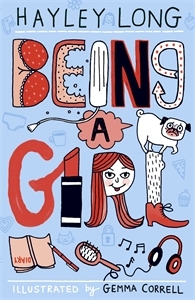 Goodreads Synopsis: Being a girl is not all sugar and spice. How can you possibly survive school and even think about talking to your crush when you have spots in places you didn’t even know you had, your boobs are too big (or too small) and the friend drama is off the charts? Luckily, bestselling YA author and sixth-form teacher Hayley Long provides a straight-talking guide to puberty – from cattiness to kisses, and everything in between. With witty black-and-white illustrations by Gemma Correll throughout, BEING A GIRL tells you everything you need to know about surviving puberty, in an honest and humorous way. My Review: I’ve read and loved some of Hayley Long’s fantastically funny fiction books before, so as soon as I’d heard that Being A Girl (a companion to Being A Boy by James Dawson) was to be written by her, I was really interested in reading it! She’s the perfect writer for a book all about growing up and, well, being a girl. Being A Girl is split into lots of informative and useful chapters, and Hayley’s writing spruces up even the worst bits with humour that will make you giggle out loud. My favourite part? Herstory! A whole chapter dedicated to some of the most important women in history! I loved reading it. Also, of course, the icing on the cake is Gemma Corrells’ illustrations: I love her work so much, as I’ve seen a lot of it in the internet. (sidenote:
  Goodreads Synopsis: Grace and her Cape Town friends are renting a house on the coast – after exams it’s their rite of passage into adulthood. Yet ‘maturity’ means different things to each of them. Brett and Louisa have plans – university, travelling – but Grace is uncertain of her future. Anxiety drives her to take control of whatever she can, starting with her own body, and it is starting to worry those around her.

 My Top Five Eating Disorder/Mental Health Memoirs
 I wasn’t going to include this one initially, partly because it’s already so widely recognised it feels almost superfluous to mention it again, and partly because it’s so widely acknowledged to be the sort of material eating disorder sufferers use as ‘thinspiration’ (Hornbacher discloses her weight and the number of calories she is consuming at pretty much every opportunity, and her descriptions of her illness are horrifying in their honesty and graphic detail). But then I was flicking through it for the hundredth time, and realised for the hundredth time that it is the sort of book it is all but impossible to flick through, because the writing is so searingly brilliant one is immediately sucked in. The way Hornbacher describes anorexia and bulimia is gruesome, dark and messy, and makes for uncomfortable reading at points, but eating disorders are gruesome, dark and messy, and to write about them in a way that evokes anything other than discomfort would be somehow wrong.
 This is the book I want to shove in the face of anyone who suggests that bulimia is ‘less serious’ than anorexia. Gleissner’s account of the way in which her compulsion to binge and purge drove her to steal from her loved ones, leave a string of jobs in quick succession and ultimately admit herself to a rehabilitation facility is a terrifying glimpse into the nightmare of bulimia. This book also does a fantastic job of exploring the dichotomy between the face eating disorder sufferers tend to show to the outside world – competent, successful, ‘sorted’ – and the reality of their inner selves – tortured, tormented, broken.
 I think it’s possible that part of the reason why I liked this book so much was how pleasantly surprised I was to like it at all, it being a ‘celebrity ED memoir’ – a genre which Nikki Grahame taught me to treat with extreme caution. But, even discarding that bias, I think this is a really well-written, touching and interesting account, not just of eating disorders but of their interplay with both fame and sexuality.
 This book is both excruciating and achingly admirable in its tackling of what remains something of a taboo: how an active eating disorder sufferer can manage – or fail to manage – the task of parenting. Rivera is touchingly honest in her account of how her anorexia and bulimia took her away, emotionally and physically, from her young daughters, and at times it is painful to read of the neglect these children suffered as a result of their mother’s sickness. But Rivera writes with skill, precision and self-effacing humour, which prevents the narrative from feeling heavy-going.
 Though this book does explore a little of the author’s struggle with anorexia, it is primarily a memoir of borderline personality disorder, and of the intensive psychotherapy Reiland undertook in order to bring her disorder under control. The level of self-disclosure in the book is admirable, offering a comprehensive insight into one of today’s most widely misunderstood mental illnesses, and the writing is masterful. I also really enjoyed the way in which this book explored therapy and the therapeutic relationship in such detail, as I think this is an aspect of mental health which lay people can find difficult to grasp, unable to quite understand the dually intimate and professional nature of the relationship between client and therapist.
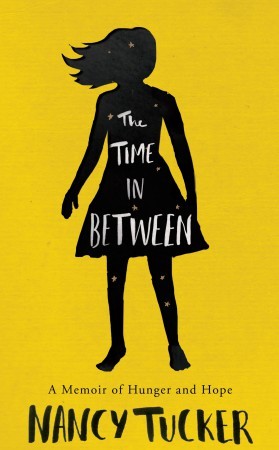 Goodreads Synopsis: When Nancy Tucker was eight years old, her class had to write about what they wanted in life. She thought, and thought, and then, though she didn’t know why, she wrote: ‘I want to be thin.’



 Synopsis from Siobhan’s site: Finding Your Inner Cherokee is a FREE, non-fiction e-book , full of case studies, exercises and advice, designed to help empower and inspire the victims of bullying.
 the bibliomaniac book blog