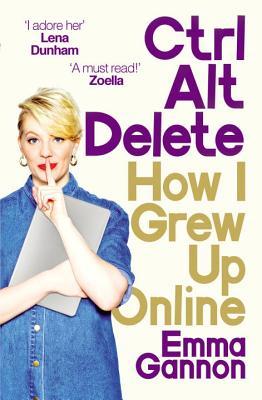
 If you’re wondering what Ctrl, Alt; Delete is, you’ve been living under a rock and/or haven’t used Twitter in a year. Emma Gannon, social media whizz, blogger and writer has written the memoir everyone from the Internet age needs to read. It’s a fantastic book – I couldn’t wait for it to come out, and I devoured it.
It’s a brilliant insight into Emma’s life, her online world, and how she’a turned her love for social media and online content into a highly successful career. She started off on Myspace, and now writes for huge media outlets, alongside running her highly successful blog and podcast.
Although I’m only 16, like Emma Gannon I have grown up with the Internet. I can’t really remember a time before it was a daily part of my life. So inevitably, I adored reading about Emma’s online experiences – so much of it was (sometimes painfully) relatable. Ctrl, Alt; Delete is hilarious and entertaining, but also raises some very interesting discussion points. Where do you draw the line between personal life and what you share online? How can you tell if people are real? How on earth do we discover small, talented bloggers when there are so many sites out there?
One of the things I love most about the book is that it’s essentially a timeline of Emma’s online life. It made me think a lot about how my internet use has changed over the years. I thought it would be quite funny to make a timeline:

I think it’s so fascinating to think about how much of my life has been shaped online. I used to write and draw in diaries up until age ten, and now virtually everything I do is written on a blog, an online notepad, drawn with my graphics tablet, programmed onto a Calendar.
I think I’m very open on the internet, and there is quite a blurred line between my online life and my ‘private’ one. If I go out for a day with friends, I won’t necessarily talk about it online, but I will turn my photos into a blog post. If I’m struggling with school, I’ll complain on Twitter and Tumblr. I switch between talking to my friends to sending them gifs on Tumblr, when we’re both in the same room. Heck, even my Media Studies coursework is entirely virtual, written on a private school blog.
A lot of people probably view my largely-online life as a bad thing. My eyes are probably so bad because I’m on the computer all the time. I don’t really like socialising IRL. I’m not very good at holding a conversation, unless it’s through social media, and I probably should get out more.
But I love it. I love growing up online. The Internet has given me so many opportunities that never would have been presented to me otherwise. I’m studying Photography and Media because I’m fascinated by editing images and online culture. I’m gaining work experience and networking just by running my blogs. I’ve met the most incredible people in my life, whom I talk to every day. I don’t know how I’d live without all of this.
So, I want to know what you think. How much of your life is online? Do you control what people see on your social media, or are you an open book?



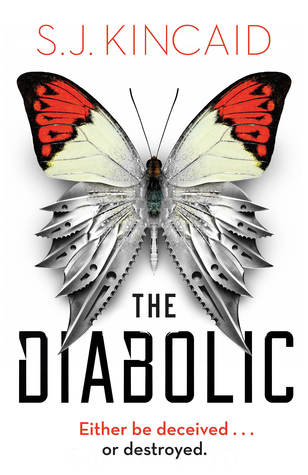 Goodreads Synopsis: Nemesis is a Diabolic, a humanoid teenager created to protect a galactic senator’s daughter, Sidonia. The two have grown up side by side, but are in no way sisters. Nemesis is expected to give her life for Sidonia, and she would do so gladly. She would also take as many lives as necessary to keep Sidonia safe.
 I’m not alone in being inspired, very recently, by
  to myself “Whatever these ladies did, I want to do that too.” They really made me want to be a writer. As a side note: my parents subscribed to The New Yorker, a famous, venerable, and long-running literary magazine, that has both fiction and journalism. I really hold this magazine accountable for my becoming a writer. For a long time I just looked at the cartoons (many of which I didn’t understand) or at the illustrations, but then, around age 13, I started to read the stories. It was there that I read Deborah Eisenberg’s piece, which changed me forever. Thank you, New Yorker. Or maybe I should curse them instead, since now I’m doomed to the writing life (unless I can think of how to become an investment banker). And as for recent novels for adults, I have a hands-down, absolute favourite called Christadora, by Tim Murphy, which is about several generations of a family in New York City’s East Village, all touched by gentrification, art, and AIDS. It’s an amazing book.



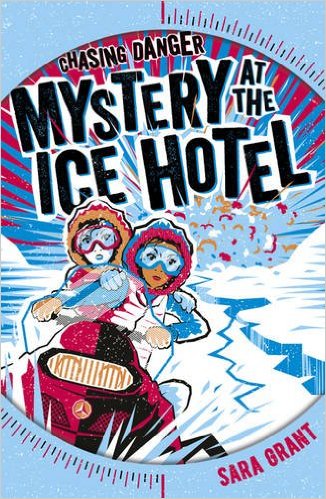


 Goodreads Synopsis: Seventeen-year-old Snow lives within the walls of the Whittaker Institute, a high security mental hospital in upstate New York. Deep down, she knows she doesn’t belong there, but she has no memory of life outside, except for the strangest dreams. And then a mysterious, handsome man, an orderly in the hospital, opens a door – and Snow knows that she has to leave …
 the bibliomaniac book blog
